


What follows is part 5 of the re-serialization of Westville Book 1. New parts drop every Monday and Friday.
If you’re new to Westville and want to dive in, you can get the books on Amazon or signed copies direct from my website:
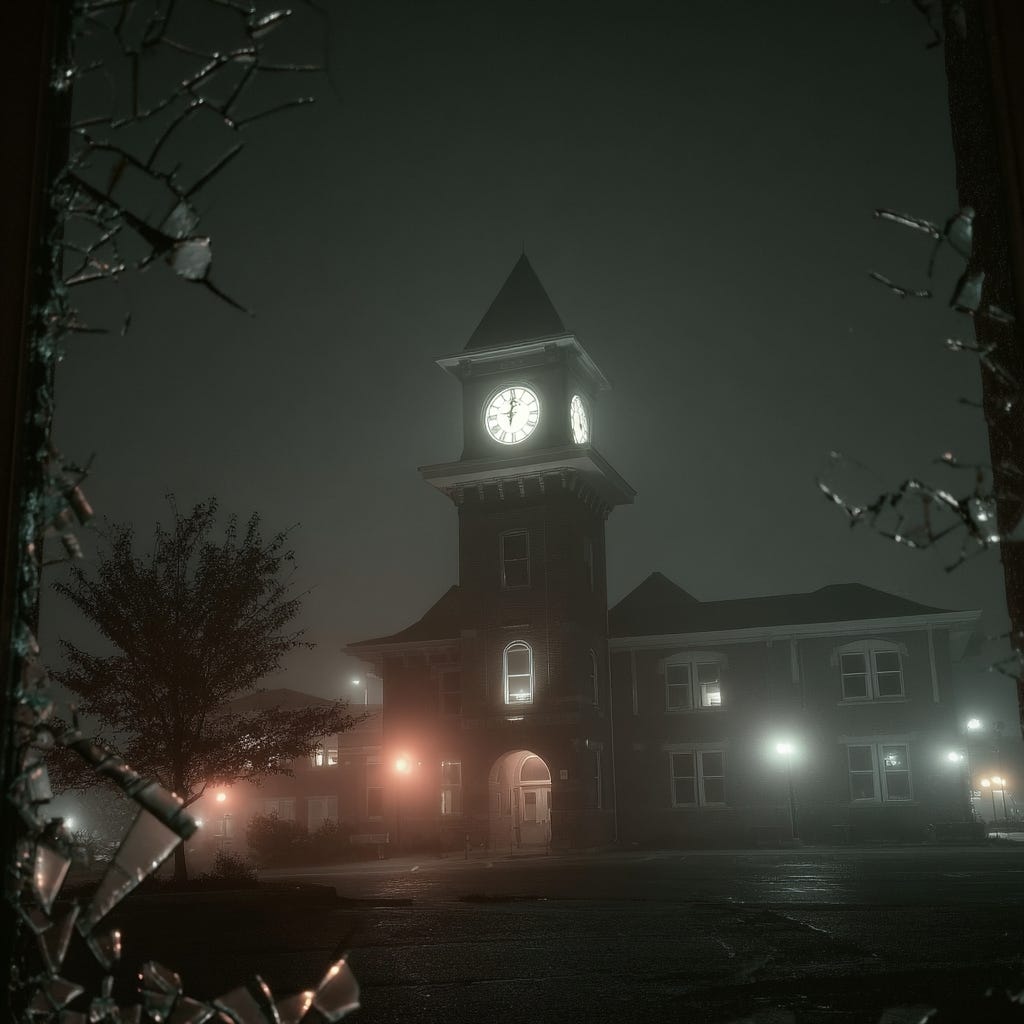
18
The not so distant slam of a hammer reverberated through the floor of Casey’s bedroom, startling him awake.
“Son of a…!” BANG. “You better believe you’re fixing your own dinner tonight, you miserable old…”
BANG. BANG. BANG.
Mrs. Blythewood at it again.
He wiped the taste of sleep from his mouth and for a few minutes, he just lay there, staring at the ceiling. The dull ache behind his eyes told him he’d slept too long, or not enough. The hammering picked up again, sharp and insistent.
Casey groaned and sat up, rubbing his face.
Technically, what Casey rented was a house. Realistically, it was a box that someone had decided to slap doors and windows on. One bedroom, barely a kitchen, and a living room small enough that he could toss his remote at the TV without much effort. The front door faced the backyard, because of course it did.
Mrs. Blythewood owned the place and was in the process of renovating the unfinished basement beneath him, desperate to get a tenant in as soon as possible. Casey had a feeling she wanted someone to split the mortgage, given how often she muttered about “that useless, good-for-nothing S.O.B” between swings of her hammer.
He ran a hand through his matted hair, thinking he needed a shower, trying to shake off the lingering weight of sleep, and reached for his watch on the nightstand.
4:47 p.m.
He still wasn’t used to the rhythms of working nights again.
Pushing himself up, he shuffled into the living room, flipping on the TV as he passed. Static. A flicker of the news about the aftermath of that freak tornado outbreak he’d heard about Saturday morning, before it all started. He’d been staying away from the news on purpose. He didn’t need reminding that she was missing. He flicked the channel.
CLAP, CLAP, CLAP, CLAP.
The Friends theme song blasted through the speakers, the opening guitar riff too peppy for the dim sleep haze clinging to his brain.
CLAP, CLAP, CLAP, CLAP.
A sharp migraine bloomed, the kind that made his head seem to float.
He inhaled sharply, pressing his fingers to his temples. A flicker in his mind.
Metal.
A room. Stark. Industrial. Wrong in the way dreams were.
A slow, steady drip hitting the floor.
Labored, scared breathing.
Casey exhaled the scatter of the afternoon’s vague dreamscape. Bad sleep, no sleep, or irregular sleep being the primary triggers for the migraines flaring up, it wasn’t exactly surprising. He’d learned to live with them, but now they were getting worse. His skull too tight around his own thoughts.
For a while in Chicago, he thought they stopped. But that didn’t last long.
He forced himself up, shaking it off. A random leftover from some dream he didn’t remember.
That was it.
The fridge’s dim yellow light flickered as he opened it. Not much inside. A bottle of mustard. A Coke. Something in an old takeout box that had probably become its own ecosystem. He threw that away, grabbed the jerky from Jerry’s and an apple, taking a bite as he leaned against the counter and closed the fridge.
He had a city council meeting to get to, and he needed a shower. He made it quick. Casey grabbed his coat, took one last glance at the TV before shutting it off.
Then he noticed his magnetized W.P.D. calendar on the floor near the fridge. He walked over and replaced it, pulling the door shut behind him.
The city council was set to meet in the old middle school, now the administration building off Graham Street. But when Casey got there, it looked like the last train out of London before the Blitzkrieg. A lingering musk of pencil shavings clung to the pockmarked ceiling tiles under fluorescent lights, stirring something dusty in Casey’s memory. Maybe that was why his brain kept filling the edges of his mind with grainy black-and-white footage of air raid sirens and firebombed streets from history classes gone by.
People clamored to get inside, pressing in wall to wall. By 5:55 p.m., it was obvious they’d need a bigger space, and the Chief suggested the upstairs of the current department, which had at one time been the community theater stage, now used by the department for a makeshift shooting range. Bullet holes peppered the concrete back wall, and Officer DeYoung along with Gail hastily went to work sweeping up the scatter of glass bottles and shreds of paper targets. Travis remarked that they were cleaning up his best work, which DeYoung was not amused by, and offered him the broom instead, the tired old officer working out a crick in his back.
Westville was scrappy when it came to shared spaces. Plans for a new City Hall were up in the air, hinging on a millage proposal that had taken a decisive backseat the last few days.
Casey took it all in. People wiping the dust off the rows of seats that probably should have been removed long ago, the old musty theater chairs creaking under the weight of anxious bodies shifting nervously between questions and mostly unsatisfactory answers.
He recognized plenty of faces. Mark Estes and Laura Rogers, now Laura Estes, high school sweethearts who’d done the white picket fence thing. Looked solid from the outside, at least. Abby Corliss, homecoming queen turned barfly. Brad Perry, burnout turned real estate mogul, if that term applied in small-town Michigan. Others whose names had faded but whose faces were carved into the memory of ten years’ worth of shared proximity.
After a forty-minute delay, things got off to a rocky start. The lionized Mayor, Scott Douglas, tried to establish control over the raucous crowd.
“Let me make it clear from the outset,” he said, gripping the edges of the podium. “We’re not here to speculate. We’re here to move forward as a community in the safest way possible while supporting the Thompson family.”
Vicky Robertson, the new school superintendent, fielded a question about increasing background checks on school employees. Howard Meyers hadn’t worked full-time for the schools, but people were panicking now, scrutinizing every adult with so much as a foot in the education system.
Casey learned early in law enforcement that innocent until proven guilty might be the mantra, but in an investigation you were better off assuming the worst and being wrong than the other way around.
Still, everything about Howard as the boogeyman didn’t settle in his gut, like silt in the river bed where the bus sank into muck and mire.
Kevin DeGraff, John Baker, and Bill VanDorn sat on either side of Douglas, mostly silent. It wasn’t just listening. It was calculated restraint. Deliberate. Heavy. Casey couldn’t help but wonder what they weren’t saying.
The floor opened to public comment, and the room became a funnel for every pent-up worry and wild-eyed theory in town.
Stan Blythewood, Westville’s appliance repair and electrical guru whose wife was likely still hammering out her aggression, gave what was probably supposed to be a reassuring speech about community values but fell flat. Old man Klein started ranting about a UFO shining strange lights in the woods behind his property last week. It earned a few eye rolls, but Casey’s stomach twisted.
He thought about Ruth Potter’s complaint. About red lights in the woods. The flash of red in his own head.
He rubbed a hand over his left temple.
Bob Morgan stood at the far end of the panel.
“Things are tough right now. I get it. We’re all on edge. That’s why I’m pulling guys off the dairy to help with the search in any way they can. Chief and I have talked, and we’re making plans to canvas and cover all the ground we can.”
The door clicked open. Casey didn’t bother to look at first. People had been filtering in and out all evening. Someone leaned against the wall next to him. He turned his head and met the sharp eyes of Agent Reeves.
“Couldn’t miss the party?” he said dryly.
“Not exactly my scene,” she answered, eyes flicking over the room. “Then again, I don’t think anyone wants to be here.”
“No, they don’t.”
The murmurs died down as Mayor Douglas cleared his throat.
“The curfew remains in place and minors must be indoors by 7 p.m. sharp. This includes Halloween and trick-or-treating. There is no reason to think anyone is in further immediate danger, but for caution’s sake.”
Reeves leaned closer. “On a scale of one to seven, how well do you think people in this town will obey that curfew?”
Casey shifted to face her. “Think you got people pegged already?”
“No,” she answered quickly. “Just spent enough time wandering through po-dunk-ville U.S.A. to know a few things.”
Casey wasn’t exactly sure what she wanted him to say to that backhanded insult.
“Didn’t realize the FBI made a habit of casing small towns.”
“They don’t, unless they have to,” she replied, straightening. “Experience from a prior career.”
“And what might that have been?”
“P.I.”
“Ah. So you’ve made it a lifelong habit of getting paid to pry into people’s business.”
Reeves smirked. “Believe it or not, there are more dishonest and despicable ways to make a living.”
Casey shifted. “Westville is stubborn, not stupid. I’ll give them an eight.”
Her lips quirked, looking unconvinced.
“We’ll see.”
When the meeting adjourned, Casey made for the doors, but Reeves cleared her throat.
“You need something?”
“Thought now might be a good time for that interview.”
“Actually, I’m about to head out for a patrol shift. Rain check.”
“Ride-along?”
“Already got that booked tonight.”
Reeves followed his gaze. Joe Thompson stood across the room, towering over the mayor.
Reeves nodded. “Another time, then.”
She turned to go, but Casey spoke up.
“Those letters on your badge. PK. Preacher’s Kid?”
Reeves squinted at him. “Not quite. Actually, far from it.” Her gaze flicked back to Joe. “Word to the wise. Don’t make promises you won’t be able to keep.”
Casey frowned. “He just needs a friend right now. And if driving around makes him feel like he’s doing something, what’s the harm?”
“All I’m saying is, we don’t know how this is going to play out. I’ve been on the wrong end of these things more times than I like to think about.”
“You feds sure know how to bring the ‘can-do’ spirit.”
“Being realistic is painful. But trust me, when it’s all said and done and things go the wrong way, the bad way, you’re better off.”
She stalked off.
Casey exhaled. He was about to follow Joe outside when a familiar voice stopped him.
“Hey.”
He turned to see Aly walking toward him.
“Didn’t see you up there,” he said.
Aly sighed, puffing her cheeks. “Mom thought one of us ought to come hear what’s happening.”
“Good idea. How’s Liv doing?”
“She’s all right. Won’t talk to either of us much.” She glanced toward the exit. “Who was that?”
“One of the department’s new shadow helpers. FBI.”
Aly shook her head. “Feels like a movie.”
“Doesn’t seem real, I know.”
They stood there, the momentum of conversation stalling.
“See you around the café,” Aly murmured, turning for the door.
Casey watched her go, metal chairs clattering in loud echoes behind him.
19
The quiet hum of the cruiser’s engine filled the cab as Casey guided it down a rain-slick back road, the rhythmic thrum of the windshield wipers marking time. Darkness pressed close, broken only by the cruiser’s headlights cutting through mist that clung to the trees.
Joe sat stiffly in the passenger seat, his hands clasped together so tightly that his knuckles were pale. He hadn’t said much since climbing in, just a quiet nod when Casey asked if he was sure about riding along. Coming off that city council meeting, he figured he could use the company. Casey hadn’t bothered to tell the Chief, and he figured he wouldn’t approve.
But it didn’t matter. Not tonight.
Casey glanced over at his friend, the shadows on Joe’s face making him look older, worn. “You doing okay?”
Joe didn’t answer right away. Instead, he remained fixated on the rain streaking against the glass.
“Was this me, Case?” Joe’s voice was low, almost a whisper, but there was no mistaking the weight in it.
“What do you mean?” Casey asked, guiding the cruiser around a bend.
“Erin’s right. I’ve been distracted. Been…” Joe’s voice cracked slightly, and he stopped short.
Casey wiped a hand down his mouth, one hand on the wheel. “Can I ask you something?”
“I haven’t had a drink since the day she went missing, if that’s what you’re wondering.”
Casey nodded, gripping the wheel a little tighter. “That’s good. I know it’s tough, man. All of this is. What you’ve been fighting and…”
He hesitated, searching for the right words.
“The night before, when Millie was last seen.”
“What about it?”
“Erin said she couldn’t get a hold of you.”
Joe shook his head. “I was at the cabin. Just needed some time to think. I lost track of time. Erin and I, we got into it about things with the company. With the mill. Jack wants me to take over. Didn’t have a drink that night, just… didn’t sleep. Couldn’t.”
Casey knew the feeling.
Joe let out a sharp breath. “If I had just been there, maybe I could have…” He nodded as if acknowledging himself. “Maybe she would be here now.”
Casey knew that feeling too. The same weight he’d carried after TJ Hopkins.
“To answer your question, no. This wasn’t you. There’s no use in blaming yourself,” Casey said, feeling the tension of his own hypocrisy.
Joe turned to him, his eyes hollow, searching. “Then who?”
Casey didn’t answer right away.
He wasn’t sure what to say, really. Even if suspicion ran wild about Howard Meyers, Casey couldn’t bring himself to believe it. Neither could Joe, he could tell. Whenever Howard was brought up, instead of the fervor of a vengeful father, there was little to no outward response. Just a contemplative numbness.
The truth was, they didn’t know anything for certain, and that was the worst part.
“Just have to keep pounding the pavement,” Casey said instead, his voice quieter now.
Joe leaned back in his seat, his shoulders sagging. “Heard the Feds got involved,” he said after a moment.
“Yep,” Casey replied.
“Doesn’t sound like a good thing.”
“It’s not,” Casey admitted, his tone clipped.
“How’s things with Aly, man?” Joe blurted out of nowhere. “Change of subject, I know.”
Casey glanced over at him, realizing he probably just wanted a distraction. Someone else’s life to ease his own.
The truth was Casey was just as shredded by the same things, but he’d play along. As much as he could. He explained the lukewarm feedback loop they were stuck in, and that he wondered if that’s where they were meant to stay. They had gone out with Erin and Joe a few times well over a year ago and had some of the best nights Casey could remember, cackling over the stupid things a Westville kid resorted to for fun when they were in high school. Including but not limited to attempting a midnight joyride in Jack Thompson’s brand new ’81 F-150, two-tone cherry red and cream, through a freshly storm-drenched field of a known misanthropic farmer. They’d ended up with a nice smattering of buckshot in the truck bed door, a debt he’d made both of them work off.
“You guys seemed good together,” Joe offered.
Casey was pulled back in from the bittersweet reverie. “Yeah, maybe.” Casey asked, “So things with your dad…”
“Are crap,” said Joe, laughing bitterly and shaking his head. “Always have been, always will be.”
Casey felt a pang of selfishness for dredging it up, but some compulsion told him to pry. “What’s going on?”
Joe’s eyes narrowed, his jaw working as he stared out the window. “All he cares about is the company. Doesn’t matter what’s going on with me, with Erin. Doesn’t matter that his granddaughter’s missing. It’s all just business with him.”
Casey hesitated, unsure if he should press. This tension between father and son was nothing new, but there was something sharper in his voice tonight. Something raw.
“Look, Joe,” Casey said, keeping his eyes on the road. “You’re doing everything you can for Millie. Don’t let your old man or anyone else make you think otherwise.”
Casey pulled into Joe’s driveway, the cruiser’s tires crunching softly on the gravel. He shifted into park and turned to his friend.
“You can’t change anything about what happened. But we’ll find her, Joe. We will.”
Joe didn’t respond at first. His hand hovered near the door handle, and for a moment, Casey thought he might say something more.
Joe just muttered, “Thanks for the ride along.”
Casey watched him trudge up the walkway to his house, shoulders hunched against the rain.
For a long moment, Casey didn’t move, just sat there with the engine idling and the wipers sweeping back and forth. Joe was breaking under the weight of it all. Casey could see it. And a part of him feared that when they did find Millie, whatever the outcome, Joe might not come back from it.
Casey pulled out of the driveway, the rain drumming against the cruiser’s roof.
20
One week.
One week since Millie Thompson first went missing.
In that time, Westville had been turned upside down and around at all angles, a snow globe in the hands of a hapless toddler.
Fervid platitudes about the days-away election had dwindled down to a dull roar, and taking its place were all the hushed murmurs about Howard Meyers, his death, and, at the same time, his suspected connection to what happened to Millie.
Casey had attended the funeral himself. The pall of those rumors hung like smoke in the Methodist Church sanctuary and an awkward silence over the luncheon. Poor Francine Meyers in her wheelchair was subject to it all, the small blessing of her condition blotting out the worst of the talk about her late husband from registering:
“No wonder he liked driving that bus with all those kids around. Pervert.”
“Sounds like he collected bits of their hair.”
“Don’t think he could have done the thing… but if he did, guess he got what he deserved.”
Looking at the newly widowed woman in the throes of late-stage dementia, he tried to blot out the image of his own mother in the same position years from now.
All the while, Westville was locked in the same old small-town routine, and most everyone with it. The annual Slate River Antique Mall Expo went off without a hitch, and signs were already going up for the array of holiday events to come. It all seemed so out of touch and removed from the dark reality.
Then, that was life.
People were murdered and kidnapped every day in every state and county. Most of them you didn’t hear about, and when you did, they were just a bit of uncomfortable information between fluff pieces on the news.
Whether as a way to cope or because a place like Westville knew no other way, life moved along regardless of tragedy or crisis.
Casey had his own way of coping.
He sat at his usual booth in Fischer’s, leafing through the reports for what must have been the ten thousandth time, hoping he’d see something new. Wishing for some kind of bright, bold revelation, the kind that lead detectives on crime shows seemed to have in the last five minutes of an episode.
He sipped his now-tepid coffee, seated in his usual corner booth with his least favorite clown frowning down at him from the picture frame on the wall.
Though Westville felt different, on the surface, it looked the same. The town never really changed. But now, instead of the usual leisurely pace and complaints about the temperamental weather, or another pizza place or an auto parts store opening in a vacant building, people were talking about curfews and casting suspicious glares at any new and unusual faces.
One of those faces happened to be sitting in the other corner booth. A man Casey hadn’t seen before. Older, probably late 50s, early 60s, wearing a heavy coat, thick-rimmed glasses, and sporting a mustache and goatee. Between sips of coffee, Casey noticed the man glancing his way every now and then. Probably he was curious about Casey’s spread of papers and pictures, which by all rights Casey probably shouldn’t have been looking through out in the open, but he often did his best thinking elsewhere, and at this mid-morning weekday hour the café was mostly dead.
Casey returned to reading the interviews with the last people who had seen Millie, including Olivia Fischer, a kid named Brett Huizinga, and a handful of other students at the game. He looked at a photo of the bracelet that he himself had found. One on the scene caked in mud and the other with it cleaned up. They hadn’t been able to get prints off it.
If it was Millie’s, why did it look so new? She’d been wearing that thing for the past couple years, at least. Maybe she’d snagged a replacement. The clasp had been broken by force, either by getting caught on something or someone doing it intentionally. To make it align with the trail of assumptions they were on now.
Then the wreck itself.
The fact that there were no skid marks on the road to signal the sudden accidental (or intentional) veering off and down the embankment felt wrong. Sure, he could have pulled up and hesitated. But that wasn’t how most people did these things. Impulse. Emotionality. A pause would have allowed for the rational mind to kick in. He was no shrink, but he’d retained more than a couple things from his criminal psychology course.
He’d already mentioned it to the Chief, but between his caution of Casey’s direct involvement and the feds already muddying things, it didn’t go anywhere, other than the general “noted” file.
He rubbed his brow and glared up at the clown picture on the wall.
“What’re you looking at?” he muttered.
“Someone who needs some sleep.”
Casey turned toward the familiar, weathered voice.
“Hey, Dad.”
Dave Benson patted him on the shoulder, folded himself into the booth with a grunt and a sigh. In the past few years, the sides of his now-wispy hair had turned gray-white, with only a tinge of brown left on top, and what used to be a hearty beard was down to little more than stubble. He smiled across the table, the same smile people used to say Casey inherited when he was a kid. Come to think of it, no one said that much lately, though Casey knew he was looking more and more like his father by the day, set apart only by the asymmetrical slant of his left eye. Julie came by with a steaming cup and offered to refill Casey’s. He waved her off with a tired hand. Dave took a sip.
“How’s Joe holding up?”
“Not great. Last thing he needed trying to kick the drinking was all this.”
“Probably not. But we never get to choose what happens. All you can do is handle it.”
Casey breathed out through his nostrils. “Easier said than done.”
“I know it is,” his dad said, looking out the window wistfully toward the white steeple of the Methodist Church across the street.
They talked about the place up in Godwin, Casey’s grandparents’ old house, which his parents moved into. Casey asked how his mom was doing. How she was really doing. The same dementia that had lulled his grandmother into catatonia seemed to be showing signs in his mom, albeit very early ones. It was something no one wanted to acknowledge or talk about, but someone would have to at some point.
“She’s fine, Case. Nothing to worry about.”
“Not yet,” Casey said.
“You know, you’ve always been a worrier. Ever since you were little.”
“Yeah?” Casey asked, half-expecting his dad to offer some magical explanation for why he was the way he was.
“I remember one night, snow blowing like hell had frozen over, you sat by the door looking down the road for your mom’s headlights for two hours, waiting for her to get home from the office.”
Casey remembered it too. His dad was right. He’d always worried. Carried weights of concern that weren’t his to control.
His mind flashed to the burning Camaro.
“I stopped over to Mrs. Potter’s the other day,” Casey said, changing the subject.
His dad asked how she was, and for a split second, Casey thought of saying something about his mom not driving anymore, having noted Ruth’s car sitting idle on flat tires. But he thought better of it. His dad wouldn’t hear it. Not yet.
His dad shifted and stretched in the booth. “I’m headed back up to Godwin after I run to the hardware store for a few things.”
“Tell Mom hi for me.”
“You coming for Christmas?”
“Probably. Dunno. Depends.” Casey gestured down at the paperwork.
“I’m sorry, Case. It’s some kinda thing. God, Howard Meyers?”
“Nothing is proven yet, Dad. Nothing for sure.”
“I know, I know. Still…”
“What about Mel?” Casey asked, shifting back to the subject of holiday plans.
“Well, your mom was trying to convince her to come home this year. Would be good to see the grandkids. I guess Steve has a big caseload right now. Some lawsuit between the Navajo Nation and the State of Arizona.”
Casey nodded. He hadn’t seen Melissa for a couple years now, or his litigator brother-in-law and his niece and nephew. She’d married several years older than herself, so the rush had been on to have kids. They didn’t talk much. Not like they should.
When they’d finished breakfast, Casey walked his dad up to the counter. As usual, they did the old song and dance of who would pay the bill, his dad winning out by sheer seniority.
“We’ll talk soon, give you a call.”
“Sounds good, Dad.”
“Take care of yourself, Case.”
Casey spotted Aly on his way out, catching her eye, but she was busy, and he needed to get back to the station. After his dad stepped out the door, Casey went back to the booth for his paperwork and coat.
That was when he saw the business card. JG Logistics, written in black corporate font on white.
He flipped the card over and saw a red-and-black hexagonal logo, two of the sides broken before meeting the others, and two small circles near those breaks.
Casey looked around the busy café, spotting a couple of old regulars sitting where the stranger had been. He thought about throwing it in the trash and chalking it up to somebody seeing him going over official-looking documents and figuring him for an entrepreneurial type who might have need for the services of a logistics company. A shameless plug and nudge.
But throwing on his coat, he tucked the card in his pocket and gathered the reports under his arm. He wasn’t sure why. Just a twinge and pull in his mind that said keep it. The faint tugging on the corner of his mind that he wished so many times he’d listened to the night when he’d pulled over TJ Hopkins.
He started at the chintzy warble of a motion-sensing ghost hanging by the door as he made his way out.
Halloween.
That’s right. Curfew or not, missing kid or not, kids would be hitting the streets tonight. For a couple tightly watched hours anyway.
He got in his car and cranked the heat. He pulled that card back out again, set it on the dash, wondering who had left it, with a hunch it had been that man in the corner booth. Casey just knew he hadn’t seen him around before, and now wasn’t exactly the best time to be a stranger in Westville.
Who was he?
And who, or what, was JG Logistics?